





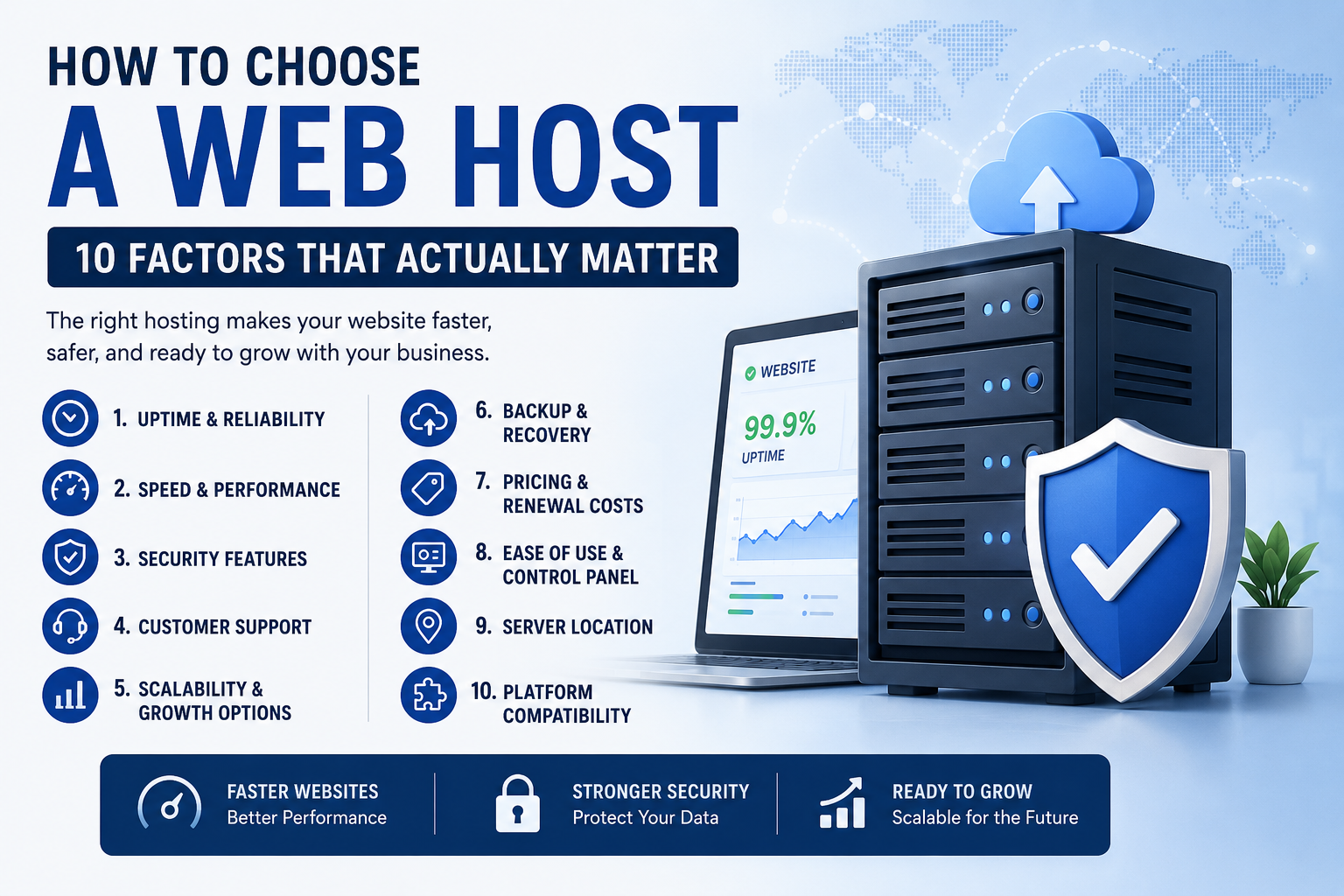
Choosing a web host is one of the most important decisions you’ll make when building a website. Whether you’re launching a business website, e-commerce store, blog, or corporate portal, your hosting provider directly affects your site’s speed, security, reliability, and overall user experience.
With hundreds of hosting companies available, it can be difficult to know which features truly matter. Here are the 10 factors you should evaluate before choosing a web host.
1. Uptime and Reliability
Your website should be available to visitors around the clock. Look for hosting providers that offer at least 99.9% uptime guarantees and have a proven track record of reliability.
Frequent downtime can negatively impact user trust, sales, and search engine rankings.
2. Website Speed and Performance
Page loading speed affects both user experience and SEO. A slow website can increase bounce rates and reduce conversions.
Look for hosts that provide:
- SSD or NVMe storage
- Content Delivery Network (CDN) integration
- Optimized server configurations
- Caching technologies
Faster hosting helps visitors stay engaged and improves search engine visibility.
3. Security Features
Cybersecurity threats continue to grow, making website security essential.
A good web host should include:
- Free SSL certificates
- Firewall protection
- Malware scanning
- DDoS protection
- Automatic security updates
Strong security measures help protect your website and customer data.
4. Customer Support Quality
When technical issues arise, responsive support can save valuable time and prevent business disruptions.
Choose a hosting provider that offers:
- 24/7 support
- Live chat
- Ticketing system
- Knowledge base and documentation
Before purchasing, check customer reviews to evaluate support quality.
5. Scalability and Growth Options
Your website may start small but grow significantly over time.
Make sure your host allows easy upgrades between:
- Shared Hosting
- VPS Hosting
- Cloud Hosting
- Dedicated Servers
Scalable hosting ensures your website can handle increased traffic without performance issues.
6. Backup and Recovery Services
Unexpected problems can happen at any time.
Reliable hosting should provide:
- Automatic backups
- Easy restoration options
- Multiple backup retention periods
Regular backups help protect your website from data loss.
7. Pricing and Renewal Costs
Many hosting companies advertise low introductory prices that increase substantially during renewal.
Always review:
- Initial pricing
- Renewal rates
- Additional fees
- Included features
The cheapest option is not always the most cost-effective in the long run.
8. Control Panel and Ease of Use
Managing your hosting account should be simple, even for non-technical users.
Popular control panels include:
- cPanel
- Plesk
- Custom hosting dashboards
An intuitive interface makes website management much easier.
9. Server Location
The closer your hosting server is to your target audience, the better the website performance.
For businesses serving customers in the Middle East, choosing hosting locations in nearby regions can help reduce loading times and improve user experience.
10. Compatibility with Your Website Platform
Not all hosting providers are optimized for every platform.
Before choosing a host, verify compatibility with:
- WordPress
- WooCommerce
- Laravel
- Magento
- Drupal
- Custom-built websites
Platform-specific optimization can significantly improve performance and stability.
Final Thoughts
Knowing how to choose a web host can save you time, money, and future headaches. Instead of focusing only on price, evaluate reliability, performance, security, support, and scalability.
The right hosting provider creates a strong foundation for your website’s success, helping you deliver a faster, safer, and more reliable experience for your visitors.
Need Help Choosing the Right Hosting Solution?
At Meta Tag, we help businesses select and manage hosting solutions tailored to their website requirements, performance goals, and growth plans. Contact us to discuss the best hosting option for your project.